Biocatalysis and Biosynthesis
Engineering microbes to produce isoprenoids, food ingredients, flavours and fragrances, and specialty chemicals from renewable carbon sources.
We design and apply enzymes and engineered microbial chassis to produce a broad palette of high-value molecules — terpenoids and apocarotenoids, carotenoids and pigments, monoterpenes for fragrance, and food ingredients including aromas and nutraceuticals. The work spans enzyme discovery and engineering, pathway assembly, and fermentation development, with strong emphasis on cis/trans selectivity, regioselectivity, and product titre.
Active product families:
- ▸ Carotenoids & apocarotenoids — astaxanthin, zeaxanthin, β-ionone, retinol.
- ▸ Monoterpenes & sesquiterpenes — geraniol, linalool, nerolidol, viridiflorol.
- ▸ Diterpenes & specialty natural products — including pleostene and other novel sesquiterpenes from fungi.
- ▸ Glycosylated & oxidised carotenoids with nutraceutical and therapeutic potential.
Selected publications
Representative figures
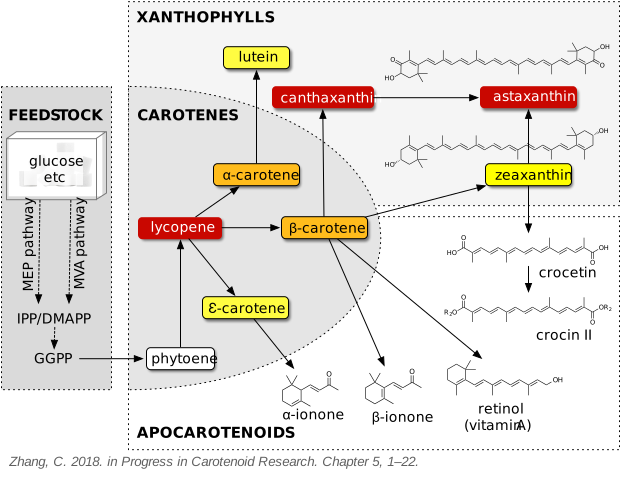
Carotenoid biosynthetic landscape. From lycopene to astaxanthin, zeaxanthin, and fragrance ionones via engineered microbial pathways. 10.5772/intechopen.79061
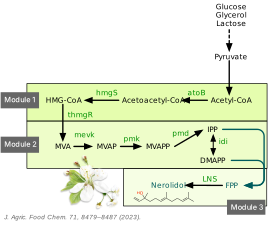
trans-Nerolidol pathway. High-yield production of trans-nerolidol from sugar and glycerol in engineered E. coli. 10.1021/acs.jafc.3c01161